Your certificate.
Modern airplane.
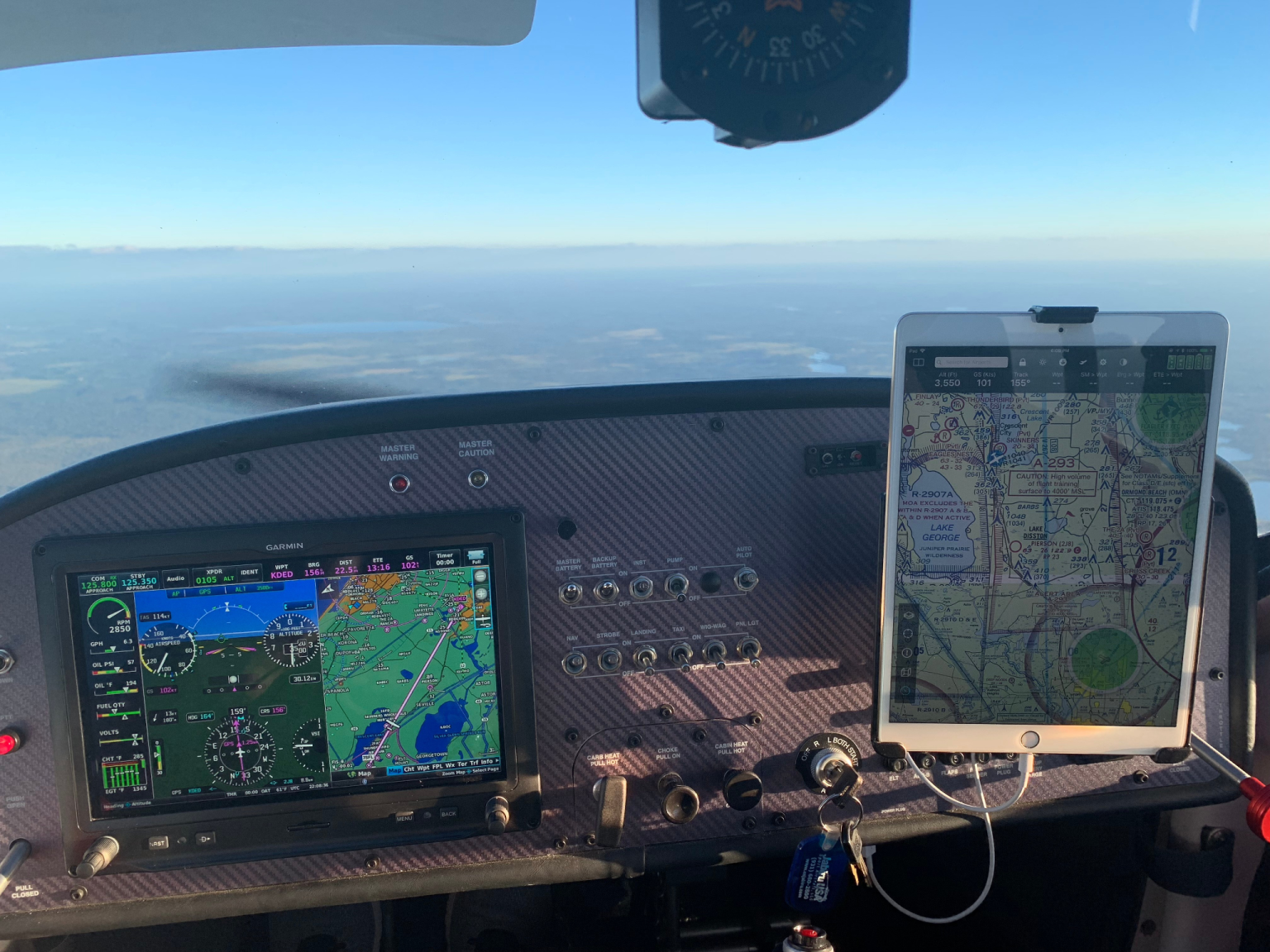
Train in a glass-panel Light Sport with a CFI who works for you — not a school.
Same FAA outcome as a flight school. Better airplane, better economics, no captive enrollment pipeline. Sport, private, and instrument paths — all in a hangared, fleet-maintained Light Sport at Denton.
Pilot · Private pilot · Instrument
How learning to fly works at A4
A4 Aviation operates a modern modern fleet at Denton Enterprise Airport (KDTO). We are not a flight school — there is no curriculum sales team, no captive enrollment, and no upsell pressure. We are an aviation operating company. The CFIs who teach you are independent professionals who chose to work on the A4 platform because the airplanes are modern, the operations are disciplined, and the economics work for both the instructor and the student.
Schedule an intro flight with an A4-approved CFI
Pick a CFI from the A4-approved roster (see below) or let us match you with one. You'll meet at KDTO, do a one-hour intro flight in the aircraft, and decide together if A4 and this CFI are the right fit for you. The intro flight is roughly $180 all-in — airplane wet rate plus the CFI's first hour. No enrollment paperwork. No pressure to commit.
Become an A4 member and start training
If you decide to train with A4, you apply for membership (the same membership any A4 renter holds). Membership gives you access to the modern fleet at the wet rate of $135/hour. You then book lessons directly with your CFI on their schedule, and book the airplane on A4's scheduling system. Two separate bookings, two separate bills — but it's the same logistical experience as a flight school, with cleaner accounting.
Complete your certificate
Your CFI manages your training syllabus, signs off your stage checks, and recommends you for your checkride. A4 keeps the airplane fueled, hangared, maintained, and ready. The DPE you'll use for your checkride is one of several KDTO-area examiners — your CFI will recommend the right fit. When you pass, your A4 membership stays active and you can keep flying as a certificated pilot.
The Core Difference
Your CFI works for you, not for an enrollment funnel.
At a traditional flight school, your CFI is paid hourly by the school and is pressured to keep you on the books — extra lessons, extra ground time, expensive add-ons. At A4, your CFI is an independent professional you hire directly. They get paid when you fly. They have no incentive to stretch out your training, and every incentive to get you to checkride sharp and ready.
The Roster
A4-approved CFIs.
Every CFI on the A4 platform has been checked out in the modern fleet, holds active CFI liability insurance verified by A4, and has agreed to A4's operational standards. We are not an instructor marketplace where anyone with a CFI ticket can teach — we vet, we verify, and we maintain the roster. The CFI you choose is someone we'd put a family member in the airplane with.
![[CFI Name — placeholder] — A4-approved CFI](/cfi-photos/cfi-1.jpeg)
[CFI Name — placeholder]
Commercial · CFI · CFII · MEI
[CFI bio placeholder — 3 to 4 sentences about background, teaching style, and what they specialize in.]
![[CFI Name — placeholder] — A4-approved CFI](/cfi-photos/cfi-2.jpeg)
[CFI Name — placeholder]
Commercial · CFI · CFII
[CFI bio placeholder — 3 to 4 sentences about background, teaching style, and what they specialize in.]
![[CFI Name — placeholder] — A4-approved CFI](/cfi-photos/cfi-3.jpeg)
[CFI Name — placeholder]
ATP · CFI · CFII · MEI
[CFI bio placeholder — 3 to 4 sentences about background, teaching style, and what they specialize in.]
Want to join the A4-approved CFI roster? See our CFI platform page →
Certificates and ratings you can earn at A4.
Pilot Certificate
- •Driver's license medical — no FAA medical certificate required
- •Minimum 20 flight hours per FAR 61.313 (typical completion 25–35 hours)
- •Daytime VFR only, one passenger, Light Sport only
- •Best for: pilots who want to fly recreationally without medical paperwork
Typical all-in cost at A4: $8,000–$11,000
Private Pilot Certificate
- •Third-class medical or BasicMed required
- •Minimum 40 flight hours per FAR 61.109 (typical completion 60–70 hours)
- •Day and night VFR, any FAA-certified aircraft you're rated for, multiple passengers
- •Best for: pilots who want the most flexibility — night, more passengers, larger aircraft eventually
Typical all-in cost at A4: $13,000–$17,000
Instrument Rating (Add-On)
- •Existing private certificate required
- •Minimum 40 hours actual or simulated instrument time per FAR 61.65
- •Flight in instrument meteorological conditions, IFR cross-country capability
- •Best for: pilots who want to fly cross-country reliably regardless of weather
Typical all-in cost at A4: $11,000–$15,000
All cost ranges are honest estimates based on actual A4 Light Sport wet rate ($135/hr), typical CFI rates ($60–$80/hr at KDTO), required ground instruction, written exam prep, and FAA fees. Real costs depend on your study pace, weather, and how often you fly. We publish ranges, not pretend numbers.
What it actually costs — the honest math.
Most flight school marketing pages advertise a too-good-to-be-true headline number ("$9,995 private pilot program") and bury the real costs in fine print. We won't do that to you. Here's what private training actually costs at A4, line by line, in 2026 dollars.
| Line item | Low end | High end |
|---|---|---|
| Airplane (60–70 hrs at $135/hr wet) | $6,600 | $7,700 |
| CFI dual instruction (40–50 hrs at $70/hr avg) | $2,800 | $3,500 |
| CFI ground instruction (10–15 hrs at $60/hr avg) | $600 | $900 |
| Headset (yours to keep) | $250 | $1,200 |
| Books, written test prep, charts | $300 | $500 |
| FAA written exam fee | $175 | $175 |
| Medical exam (skip if Pilot) | $0 | $200 |
| DPE checkride fee | $800 | $1,000 |
| A4 membership (12 months training average) | $1,200 | $1,800 |
| Realistic total | $12,725 | $16,975 |
Pilot students subtract roughly $5,000 from these totals due to lower hour minimums and no medical. Instrument add-on adds $11,000–$15,000 on top of an existing private certificate. CFI hourly rates vary by CFI — current A4-approved CFI rates are visible on each CFI's profile card above.
Why we publish the range
A school that won't show you the math doesn't want you to do the math.
If you're shopping flight schools and a competitor's website doesn't publish a realistic cost range, ask them why. Then ask them what their actual graduate average is — not the headline, the average. The answer (or the silence) tells you what you need to know.
Why training in a Light Sport gets you to checkride faster — and cheaper.
The airplane you train in determines two things: how much your training costs, and how prepared you are for modern aviation when you finish. Training in a 1970s Cherokee on $7 avgas means you're paying $128/hour all-in and learning to fly steam gauges. Training in a Light Sport means you're paying $135/hour wet (plus ~$30/hr fuel at 5 GPH) and learning the glass-panel, ADS-B-equipped aviation you'll actually fly the rest of your career.
Glass-panel current
Dual GRT Sport HS glass, DigiFlight autopilot, ADS-B In/Out, engine monitor with fuel flow. The avionics suite you train on is the avionics suite you'll fly afterward — whether you go on to a 172 with a G1000, an SR22, or a Cirrus Vision Jet. Steam-gauge training is a head start backwards.
5 GPH math
Every dual lesson at 5 GPH fuel burn is $24 cheaper in fuel cost than a 9 GPH Cherokee. Over a 70-hour private pilot syllabus, that's a thousand dollars saved on fuel alone — and you spent every one of those 70 hours on a modern airplane.
eligible
Even if you ultimately want a private certificate, you can start training under rules without a medical, fly solo at 20 hours, and decide later if you want to continue toward the full private. The Light Sport lets you start now, decide later. A Cherokee doesn't.
The Fuel Math
The fuel burn is the difference between flying and not.
The math hasn't changed — the price of fuel has. A 9 GPH airplane at $7 avgas is a $63-an-hour fuel bill before the engine starts. A 100-hour year is $6,300 in fuel alone. That is why used Cherokees and 172s are sitting on ramps from Dallas to Detroit.
Our modern fleet burns 5 GPH. That is $35 an hour in fuel. $3,500 a year. That efficiency is what lets us quote a low all-in wet rate — $135/hr on the J250, $150/hr on the J230 — with fuel included. One number covers the airplane and the gas. No receipts, no reimbursement paperwork, no surprises at unfamiliar FBOs. You know what an hour costs before you preflight.
Comparison assumes $7/gal 100LL across all three aircraft. These are fuel costs only. A4 Aviation's Light Sport rates are wet, so members never see a separate fuel bill — the low ~5 GPH burn is what lets us quote a low all-in wet rate.
Frequently asked questions from student pilots.
If A4 isn't a flight school, can I really finish my private certificate here?
Yes. The path is identical to a flight school: you train with a qualified CFI, you fly a properly equipped airplane, you take a checkride with an FAA DPE, and the FAA issues your certificate. The FAA doesn't care whether your CFI works for a flight school or works independently — they care that your training meets FAR 61 requirements. A4-approved CFIs train to the same standards as any flight school CFI, often better, because they're not pressured to stretch out lessons to feed a school's revenue.
How long does it take to earn a private certificate at A4?
Most students at A4 finish in 5 to 8 months flying twice a week. Weather, your study pace, and your CFI's availability are the variables. Accelerated paths (training daily for 3–4 weeks) are possible with advance scheduling and a CFI who runs accelerated programs.
Can I get loans or financing for flight training at A4?
Some aviation-specific lenders (AOPA, Stratus Financial, others) finance Part 61 training and rental costs. A4 does not offer in-house financing. Your CFI may know which lenders have worked for past A4 students. Many students pay as they go — $1,000–$1,500 per month over 8–12 months — which is often more practical than a lump-sum loan.
Do I need to commit to a specific CFI?
No. You pick the CFI who feels right, and you can switch CFIs if the fit changes. A4 maintains the roster; you maintain the relationship. We've had students start with one CFI for the basics and finish with another for the cross-country and checkride prep — that flexibility is a feature.
What if I want to learn in a Cessna 172 instead?
A4 operates Light Sport. We don't operate 172s. If you specifically want to train in a 172, there are other schools at KDTO that fly them. We'd argue training in a Light Sport is a better foundation for current aviation than a 1970s 172 — and the fuel-cost math is significantly in your favor — but it's your training and your choice.
Can I do my checkride at A4 in the aircraft?
Yes. KDTO has multiple FAA DPEs (Designated Pilot Examiners) who conduct private pilot and pilot checkrides in Light Sport. Your CFI will recommend the right DPE for your situation and schedule the checkride when you're ready.
Is the aircraft a real airplane for a private certificate?
Yes. The Light Sport J230 and J250 are FAA-certified Light Sport (S-aircraft). They are real, FAA-certified, IFR-equipped (where so noted) production aircraft. Pilots earn their certificate in them. Private pilots earn their certificate in them. The FAA recognizes the aircraft as a fully legitimate training platform.
What if I move or change my mind midway through training?
Your training records belong to you, not to a school. Your CFI can transfer signoffs and your logbook to any subsequent CFI anywhere in the country. You're not locked into an enrollment contract. You're not paying for a program that you'd lose if you stopped.
Start with an intro flight.
One hour in the airplane with an A4-approved CFI. About $200 all-in. No enrollment paperwork. No commitment. If A4 is right for you, you'll know in one flight. If it isn't, you've still flown a beautiful airplane on a Saturday morning.
Base
Denton Enterprise
KDTO · Denton, Texas
(214) 509-8456
info@a4aviation.co
Sheltair FBO · KDTO · Denton, Texas