Log real PIC.
Without the markup.
Glass-panel aircraft, low wet rate, dispatch-reliable — built for pilots stacking hours.
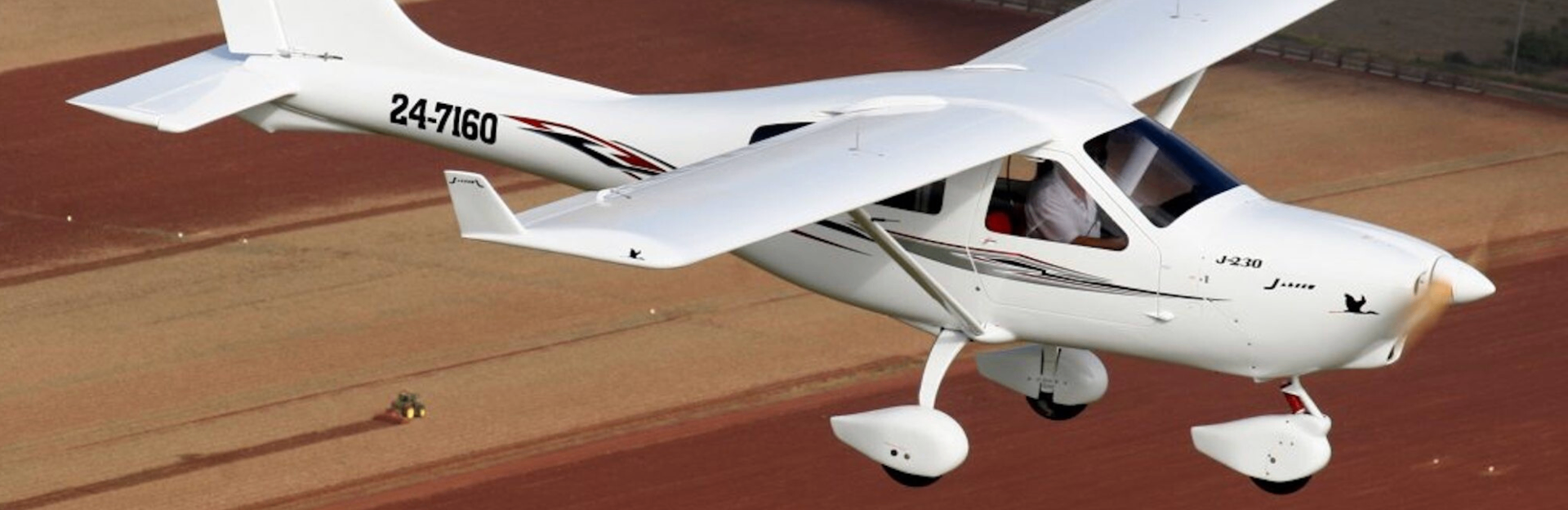
$150/hour wet means a low base rate plus the most fuel-efficient fleet in the club market. 5 GPH cruise, hangared overnight, and a backup airframe so a single squawk doesn't kill your week.
Hangared · Glass panel · ADS-B
Why time builders pick A4.
The cheapest hour, honestly.
Most cheap rentals are dry — meaning you pay for fuel on top. At $7-a-gallon 100LL, a $65/hr dry Cherokee burns 9 GPH and costs $128/hr all-in. Our $150/hr wet Light Sport is $150/hr all-in — fuel included, no receipts — and you get glass, autopilot, ADS-B, and a modern airframe. Stop subsidizing 1970s fuel burn while pretending you're saving money.
An airplane that's actually available.
Time building dies one cancelled lesson at a time. A4's fleet is hangared, fleet-maintained, and backed up. When you book a 6 AM cross-country, the airplane is fueled and ready at 5:45. We don't run a first come, first stuck maintenance posture — we run a multi-airplane fleet so you have redundancy when something does go down.
Hours that count in the logbook.
Glass-panel Light Sport hours look modern in a logbook. ADS-B time, autopilot time, and complex avionics exposure are exactly what an airline interviewer wants to see. You're not just logging hours — you're logging current airplane time. That's a real difference at the regional interview table.
What 150 hours actually costs at A4.
| Scenario | Cost / hour | 150 hours |
|---|---|---|
| A4 Light Sport J230 — wet (fuel included) | $150 all-in | $22,500 |
| Cherokee at $65 dry + 9 GPH at $7/gal fuel | $128 | $19,200 |
| Cessna 172 at $95 dry + 9.5 GPH at $7/gal fuel | $162 | $24,300 |
| Cessna 182 at $125 dry + 14 GPH at $7/gal fuel | $223 | $33,450 |
Comparison assumes $7/gal 100LL across all aircraft. Light Sport engines are factory-approved for ethanol-free auto fuel where available — typically $1–$2/gal cheaper than 100LL.
The Honest Read
You save $4,000+ vs. a 172. You save $13,000+ vs. a 182.
And every hour is in a glass-panel, ADS-B-equipped airplane that looks current in a logbook. Time building isn't just about quantity — the panel matters. Future-you, sitting at a regional interview, will thank you for the right hours, not just the cheap ones.
The Fuel Math
The fuel burn is the difference between flying and not.
The math hasn't changed — the price of fuel has. A 9 GPH airplane at $7 avgas is a $63-an-hour fuel bill before the engine starts. A 100-hour year is $6,300 in fuel alone. That is why used Cherokees and 172s are sitting on ramps from Dallas to Detroit.
Our modern fleet burns 5 GPH. That is $35 an hour in fuel. $3,500 a year. That efficiency is what lets us quote a low all-in wet rate — $135/hr on the J250, $150/hr on the J230 — with fuel included. One number covers the airplane and the gas. No receipts, no reimbursement paperwork, no surprises at unfamiliar FBOs. You know what an hour costs before you preflight.
Comparison assumes $7/gal 100LL across all three aircraft. These are fuel costs only. A4 Aviation's Light Sport rates are wet, so members never see a separate fuel bill — the low ~5 GPH burn is what lets us quote a low all-in wet rate.
Frequently asked questions from time builders.
Do I need to be a member to rent at A4?
Yes. A4 operates a membership-based rental model. Membership is straightforward — apply, complete a checkout in the aircraft, and you're flying. The monthly membership is modest and covers insurance, scheduling access, and dispatch support. See the Membership page for current rates.
What's the checkout process?
A standard 2–3 hour checkout in the aircraft J230 or J250 plus a ground review. Pilots transitioning from a 172 or Cherokee typically complete the checkout in one session. Pilots without recent retractable or complex experience may need an additional flight.
Can I take cross-country trips?
Yes. The Light Sport J250 has 35.4 gallons usable and roughly 6.5 hours of endurance, which makes 800-nm one-way trips reasonable. We require advance notice for trips over four hours and overnight reservations.
How do I count Light Sport time for commercial requirements?
The Light Sport J250 is a Light Sport and counts as fixed-wing single-engine land time. All hours apply toward the 250-hour commercial total time. Some Part 61 commercial requirements specifically require complex or technically advanced aircraft time (15 hours typically) — the aircraft does not satisfy the complex requirement, but it satisfies the technically advanced aircraft (TAA) requirement for some uses. Confirm with your CFI which requirement you're satisfying for your specific path.
What's actually included in the $150/hour wet rate?
Airplane, hangar, insurance, maintenance, ADS-B service, and a 24/7 dispatch line. You pay $125 for the aircraft and buy your own fuel. That's it. No hidden charges. No markup on gas.
Where do I fuel up on cross-country trips?
You fuel directly and retain receipts. Our aircraft are factory-approved for ethanol-free auto fuel — typically $1–$2 cheaper per gallon than 100LL where available. You control where you buy fuel and you keep the savings.
Can I do my instrument rating in the aircraft?
Yes. Both J230 and J250 in the A4 fleet are IFR-equipped with glass panel, autopilot, and ADS-B. Confirm with your CFI that the airplane meets the specific requirements for your training path (most do).